ADVERTISEMENT | ADVERTISE WITH US
ADVERTISEMENT | ADVERTISE WITH US
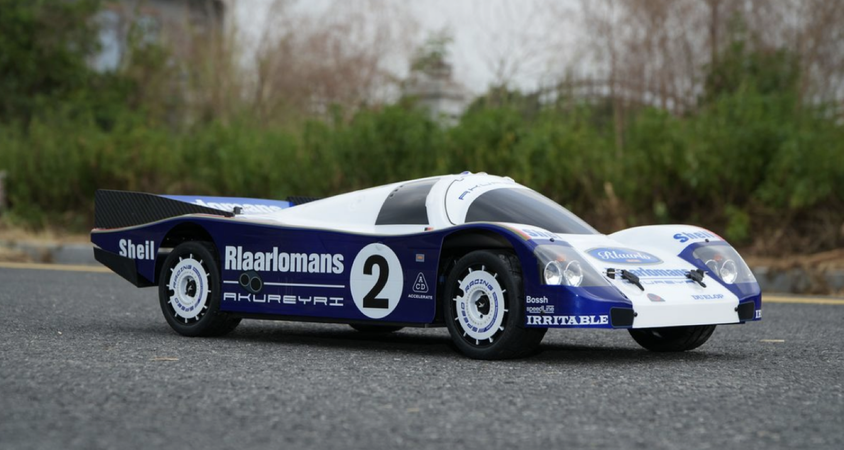
Press Release From Rlaarlo:
www.rlaarlo.com
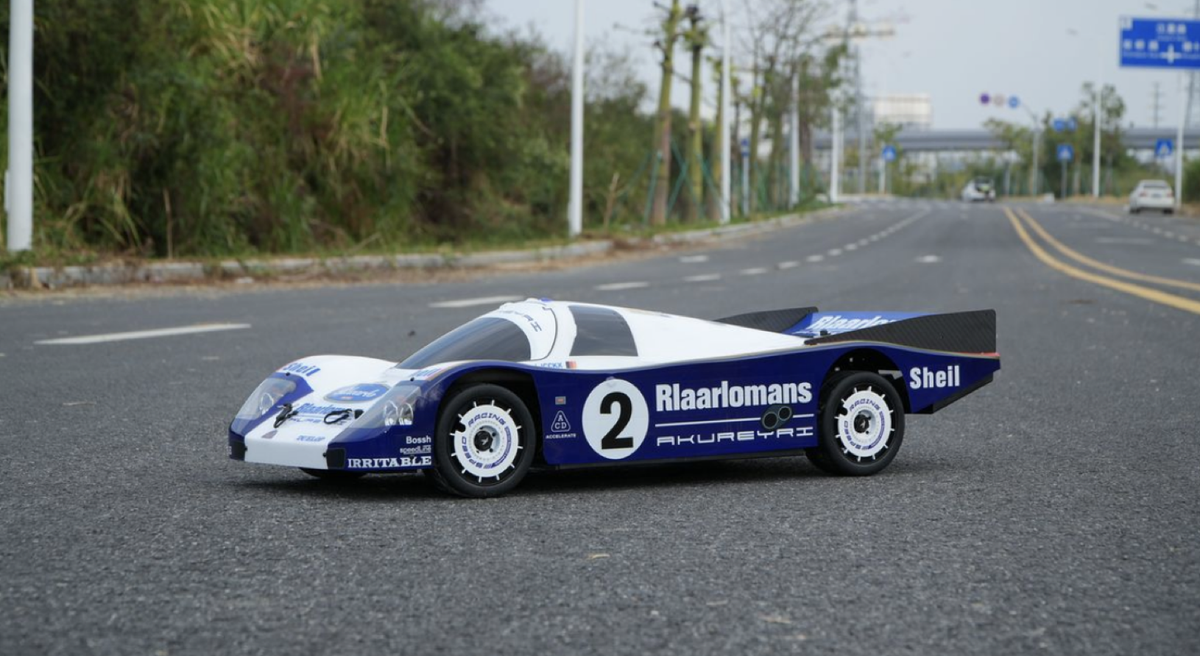
Four generations of prototypes shaped RLAARLO’s 1/6-scale electric speed run car. The development team tested what happened at launch, what changed as speed built and how much power the car had left for the next pass.
On a closed straight in the summer of 2024, RLAARLO’s first AK962 prototype, known as A0, crossed 200 km/h (124 mph). Its nose began to rise and the car wandered off line. Adding rear downforce settled the tail but lifted the nose farther. Ballast in the nose held it down, but the car took longer to accelerate and the front suspension bottomed out.
Why RLAARLO moved up to 1/6 scale
The project had begun in November 2023, when RLAARLO CEO Edison Rao brought together ten RC speed run specialists and the company’s engineers to form the EDISON development group. Over three months of discussions, they settled on a 1/6-scale platform and a research target of 400 km/h (249 mph). Work on the new car began in February 2024.
RLAARLO’s 1/10-scale AK917 speed run series recorded a speed of 305 km/h (190 mph). The team had tried lengthening the wheelbase and raising the voltage on its smaller 1/10-scale platform. The tires and drivetrain still had to cope with high rotational speeds, and the added weight used up more of the straight getting the car up to speed. A larger tire covers more ground per revolution. At the same road speed, it turns more slowly. Moving up a scale also made room for the engineers to shift the motor and batteries around and to give cooling air a path through the car.
That spring, they compared motor layouts and gearing on the bench. Moving a single motor forward put more weight over the front axle. Running two motors called for a different gear ratio. The team kept the mounting layout open so it could change the weight distribution and gearing on the same chassis.
By May, A0 was on the rollers for low-speed running. It met the team’s initial stiffness target but weighed more than planned. Some of that weight proved harder to remove than expected. Thin-walled aluminum parts developed fatigue cracks, and all-carbon parts proved too brittle in some applications. The engineers used carbon reinforcement in the suspension arms and kept machined aluminum for selected structural parts.
A1 and the air beneath the car
From September 2024 into January 2025, the team worked on the body and floor together. The underside of A0 was uneven, disrupting the airflow that fed the rear diffuser. Raising the rear wing introduced a shudder as the wing stalled. Changing the wing alone still left the engineers with too little control over how the aerodynamic load was shared between the front and rear wheels.
For A1 they flattened the floor, added a front splitter and fitted side skirts to limit the air entering from either side. The first skirts needed ribs to stiffen them. Airflow simulations showed where the diffuser needed a change of angle. In the scale-model wind tunnel, the team checked the load at each axle and found that one rear-wing setting would not suit the full range of conditions. An electrically adjustable wing let the driver change that angle. On the straight, the engineers used smoke to trace the airflow and checked the car’s attitude as it passed.
Loads on the chassis and tires
The chassis had shown damage of its own. After an impact test, the holes that located the suspension arm pins had deformed. A thicker aluminum plate added weight. Stiffer shocks simply transferred the impact back to the pin mounts. The team tied the chassis together with bracing running across the car and along its length, and lowered the gears and driveshafts toward the floor. Static load and torsion tests let the engineers check the revised structure before putting it through impact and rollover tests.
Even with the nose better settled, A1 still vibrated late in a fast run. This time the tread itself was growing in diameter. A harder tire helped it hold its shape but slipped at launch. A wider tire added weight and drag, and balancing weights smoothed the vibration only over a narrow range of wheel speeds. The engineers could reproduce the growth on a spin rig, where they tested tires to failure and evaluated an internal support ring.
Why A2 needed a coarser pinion
By February 2025, the team was testing a replacement for the Mod 1.0 motor pinion that had shed teeth under hard launches. A wider gear face fouled the parts beside it. The team moved to a coarser Mod 1.5 pinion, which gave each tooth a broader base, and ran it on a gear fatigue rig. Heat also affected how the gears meshed. A metal bearing seat molded into the gearbox housing helped keep the shaft in position as the housing warmed.
Getting A2 to hold a line
One vibration had shown up even when the drivetrain was spinning without load. A heavier steel shaft changed the speed at which it resonated, but added rotating weight and load on the bearings. The engineers tested a 440C stainless steel core wrapped in carbon fiber, bringing the shaft up to speed in stages on a balancing rig. Steering wear got a similar bench test. Shims took up the initial play, but a plastic support still wore around a replacement metal shaft. The engineers tested a metal shaft in metal supports through repeated steering cycles.
A2 also gave the team a way to compare anti-roll bar settings. Removing the bar made the car wander on the straight. A thicker bar made it push wide in corners. An electrically operated linkage let the driver connect or release the bar from the radio. When the plastic lever flexed instead of completing the switch, the engineers replaced it with an aluminum one and compared the two settings through figure eights and fast corners.
What the third sprint revealed
A single pass could hide a loss of power. On successive sprints the motor ran hotter and output fell. Adding a fan cost power and added drag. Shorter gearing reduced top speed. After sustained-load bench tests, the team revised the cooling passages and gearing, then ran three sprints in succession to check how much power the car retained on the third.
From A3 to the final car
A3 entered high-speed development in the second half of 2025. While that work continued, RLAARLO planned to share drawings and test work with speed run specialists and community drivers. By early 2026 the prototype was back on a closed straight. In February the team repeated the run three times to check whether it could reproduce its result. In June, drivers testing cars on different straights sent their data back. The results varied from car to car, prompting the team to put its setup instructions into a common guide. The final entry in the development log records the car passing its closed-course consistency check in September 2026.
Pricing and availability
RLAARLO expects the AK962 to go on sale on November 25, 2026, at 00:00 Beijing time (November 24 at 16:00 UTC). The Roller is priced at US$549.99, the single-motor RTR at US$749.99 and the twin-motor RTR PRO at US$999.99.


ADVERTISEMENT | ADVERTISE WITH US
ADVERTISEMENT | ADVERTISE WITH US
 Eng / Usd
 Français
 Deutsch
 Italiano






Recent comments